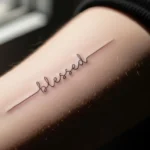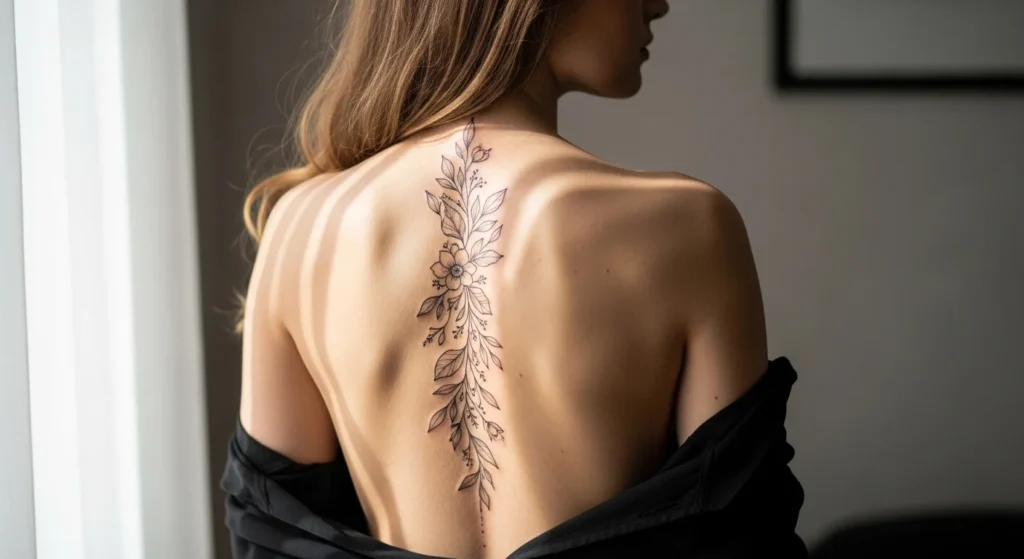
If you want a fine line tattoo that can be bigger, more detailed, and more likely to stay crisp, the back is basically the VIP section of placements. It’s a large canvas, it doesn’t rub against everything all day, and it usually gets less sun than arms or shoulders — which is huge when you’re working with delicate ink.
The result? Back fine line tattoos often age beautifully when they’re done by the right artist and cared for properly.
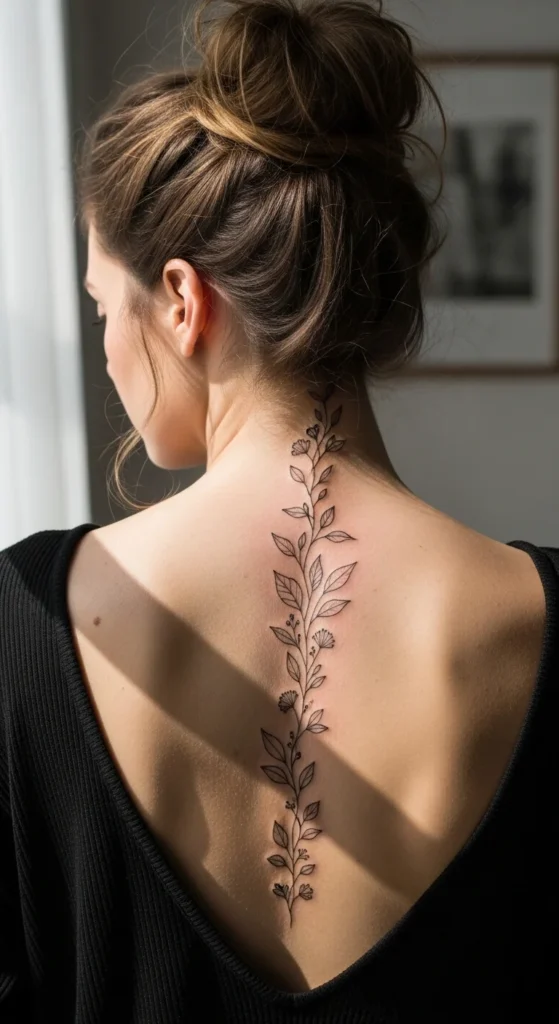
Why the Back Is One of the Best Spots for Fine Line Tattoos
Fine line tattoos can fade faster on high-friction, high-sun areas. The back avoids a lot of that.
What makes the back so good?
- Big, open space for intricate designs (without crowding)
- Low friction compared to hands, wrists, and elbows
- Often less sun exposure, especially upper/mid-back
- Great “flow” zones (spine, shoulder blades, lower back curve)
This is why so many artists recommend the back when someone wants a delicate tattoo with maximum longevity.
Step 1: Pick the Right Back Placement for Your Design
Back placement isn’t one-size-fits-all. Where you place it should match your design’s shape and how you want it to move with your body.
Popular back placements (and what they’re best for)
Spine (center line)
Perfect for designs that look amazing in motion:
- florals
- vines
- mandalas
- ornamental chains
Upper back / between shoulder blades
Ideal for symmetrical pieces, wings, or larger botanicals.
Back of neck flowing downward
Great if you want something that feels subtle but dramatic when hair is up.
Lower back
A flattering canvas for decorative shapes and curved motifs that follow the natural dip.
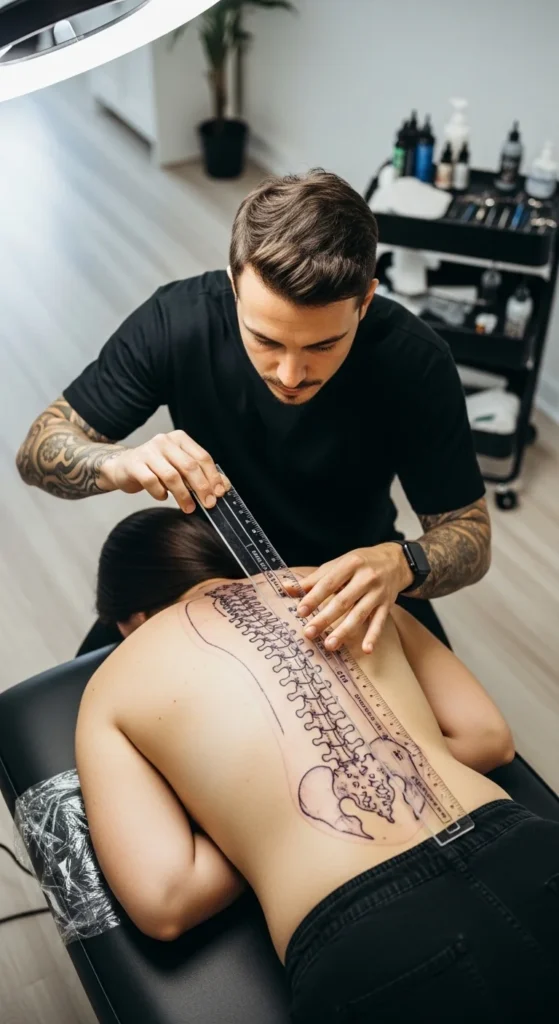
Step 2: Choose an Artist Who Specializes in Fine Line
A fine line tattoo is all about precision. On a large back piece, that precision has to stay consistent from top to bottom — and that’s a skill.
What to look for in a back fine line artist
- Healed photos (not just fresh tattoos)
- Clean, even lines with no fuzzy edges
- Experience with large-scale fine line work
- Strong stencil placement and symmetry skills
Quick vetting questions to ask
- “Do you have healed photos of back pieces?”
- “Do you use single needle or tight liners for fine line?”
- “How do you plan sessions for larger designs?”
If your artist is confident and experienced, they’ll have no problem answering.
Step 3: Know the Techniques That Keep Lines Crisp
You don’t need to be a tattoo expert — but it helps to understand what “good” looks like.
Techniques commonly used for fine line back tattoos
- Single needle (or tight liners) for sharp detail
- Light pressure + steady pace to avoid blowouts
- Three points of contact for stability during long lines
- Whip shading or stipple shading for delicate depth
The back is a forgiving canvas, but a heavy hand can still cause:
- blown-out lines
- patchy ink
- overworked skin (which heals blurry)

Step 4: Pick a Design That Ages Well on Skin
Because the back offers so much space, you can make smarter design choices that help your tattoo hold up long-term.
Designs that look amazing on the back (and age well)
- Spine florals (wildflowers, roses, vines)
- Ornamental mandalas along the spine
- Sprawling botanicals across the shoulder blade
- Single-line abstracts (faces, symbols, flowing shapes)
- Micro-realism with soft shading (animals, nature scenes)
Design tips for longevity
- Give the design breathing room (don’t cram tiny details)
- Avoid ultra-thin micro text (it softens quickly)
- Choose medium detail instead of “microscopic detail everywhere”
Think: elegant and airy, not crowded.
Step 5: Prepare for Your Appointment (Back-Specific Tips)
Back tattoos are easy to get… but only if you prep smart.
The day before / day of
- Wear a loose button-up or zip hoodie (easy on/off)
- Shower and exfoliate lightly (no harsh scrubbing)
- Avoid alcohol and heavy sun exposure
- Eat a real meal beforehand (long sessions = low energy)
If your design is large
Most back fine line tattoos are done in multiple sessions. That’s normal and often better — it prevents overworking the skin.
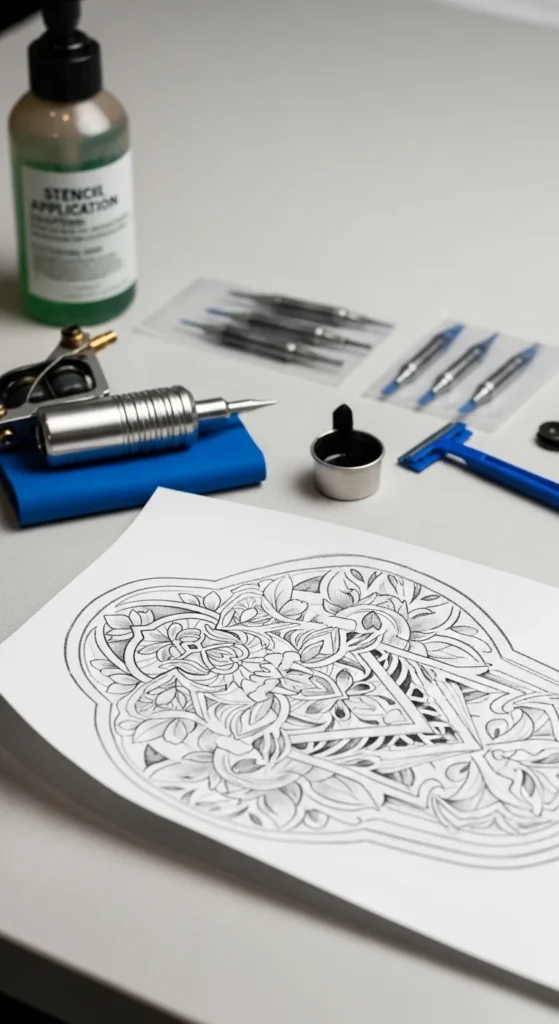
Step 6: Back Tattoo Aftercare That Actually Works
Back tattoos often feel “easier” because they don’t rub as much — but aftercare still matters, especially in the first few weeks.
Healing timeline (typical)
- 2–4 weeks: surface healing
- Up to 3 months: deeper layers settle and lines sharpen
Back tattoo aftercare basics
Do:
- Wash gently with fragrance-free cleanser
- Pat dry (no rubbing)
- Use a fragrance-free moisturizer in a thin layer
- Wear loose, breathable clothing
Avoid:
- Heavy ointments (can clog and blur healing)
- Sleeping directly on the fresh tattoo
- Sweaty workouts in week 1
- Picking flaking skin (big cause of ink loss)
Pro tip: Many people struggle to moisturize evenly on their back. A clean applicator or help from someone you trust can make a big difference.
Long-Term: How to Keep a Fine Line Back Tattoo Looking New
The best part of a back placement? It usually holds up better than exposed areas.
Still, fine lines are delicate — and maintenance is part of the deal.
Your long-term routine
- Moisturize after healing (keeps skin smooth)
- Use sunscreen when your back is exposed (beach, pool, summer tops)
- Expect a touch-up around 3–5 years if needed
Final Takeaway
If you want a fine line tattoo with room for detail and strong longevity, the back is one of the smartest placements you can choose. Go for a design that flows with your spine or shoulder blades, pick an artist with healed fine line work, and keep aftercare simple and consistent.
✨ Save this guide for later — and use it when you’re ready to book your back piece!