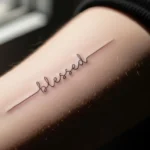
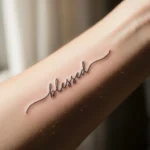
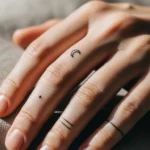
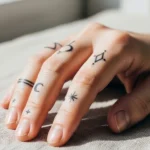
Ever see tattoos that look amazing individually—but somehow feel disconnected together? That’s usually a flow issue. Tattoo flow is what makes ink feel like it belongs on the body instead of sitting on top of it. When tattoos flow well across your body, they move naturally, connect visually, and age better over time. The good news? You don’t need a full body plan on day one. You just need to think a few steps ahead.
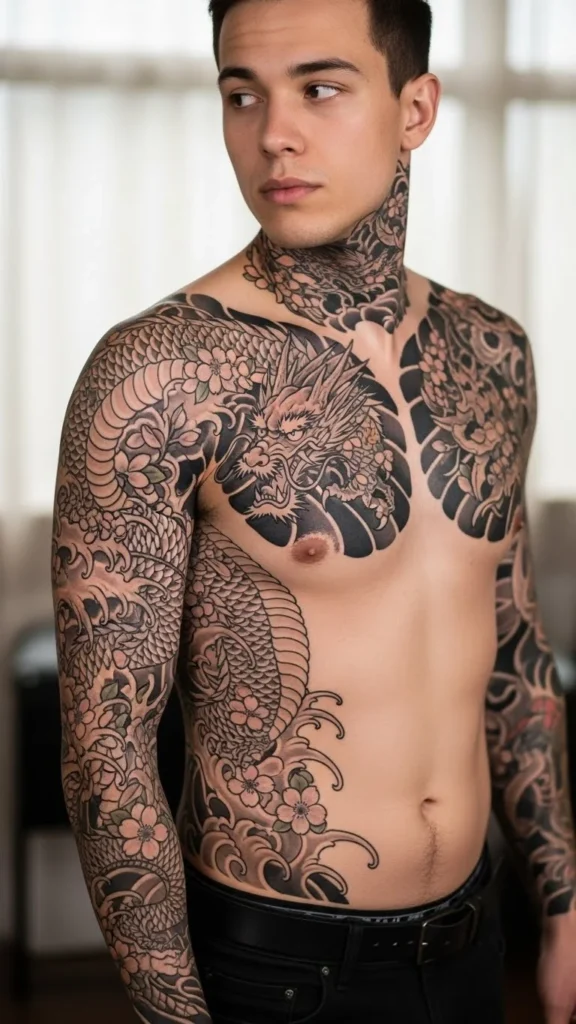
What Tattoo Flow Actually Means (In Simple Terms)
Tattoo flow is how designs move with your body’s natural lines.
Good flow:
- Follows muscles and curves
- Leads the eye smoothly from one tattoo to another
- Feels balanced from different angles
Bad flow:
- Looks scattered or random
- Stops abruptly at joints or edges
- Feels heavy in one area and empty in another
Flow doesn’t mean everything has to match. It means everything needs to belong.
Start by Understanding Your Body’s Natural Lines
Your body already has built-in guides.
Key flow lines include:
- Spine (vertical center line)
- Collarbones (horizontal curves)
- Shoulder caps (rounded movement)
- Rib and waist curves
- Arm and leg muscle direction
When tattoos follow these lines, they feel natural—even if the designs are bold.
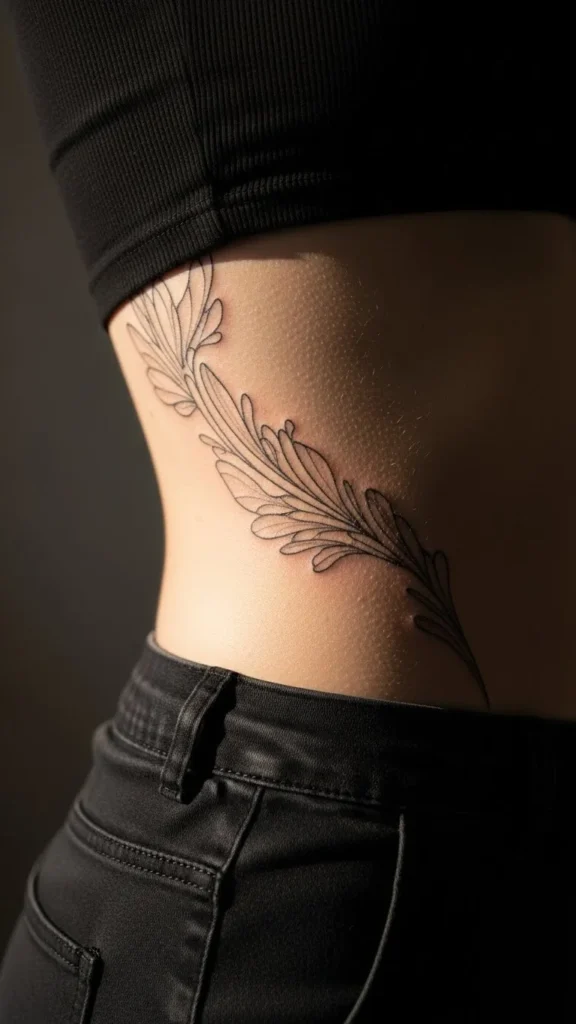
Tip: Designs that fight the body’s direction often look “off,” even if they’re well done.
Pick a Consistent Visual Style (Not Just Random Designs)
Flow starts with style consistency.
You don’t need matching tattoos, but you do need:
- Similar line weight
- Similar level of detail
- A shared mood (dark, soft, bold, minimal)
Styles that flow well together:
- Fine-line + minimal shading
- Black and grey realism
- Traditional with consistent color palette
- Ornamental or geometric patterns
Mixing styles isn’t wrong—but doing it without intention can break flow fast.
Plan Big Areas Before Small Ones
Large tattoos act like anchors. Smaller tattoos connect around them.
Best order for flow:
- Big areas first (chest, back, thighs, upper arms)
- Medium connectors (shoulders, ribs, hips)
- Small fillers (gaps, joints, transitions)
If you start with small tattoos everywhere, you may accidentally block future flow options.

Use Connectors to Tie Everything Together
Connectors are the secret weapon of good tattoo flow.
Common connector elements:
- Smoke, clouds, or mist
- Florals or vines
- Abstract lines or dotwork
- Soft background shading
- Repeating symbols or patterns
These don’t steal attention—they guide the eye.
Pro tip:
Not every connector needs to be bold. Subtle shading often works best.
Think About How Tattoos Look in Motion
Your body is rarely still.
Check flow by:
- Raising and lowering arms
- Sitting and standing
- Twisting slightly
Good flow still makes sense when you move. Poor flow looks disjointed the moment posture changes.
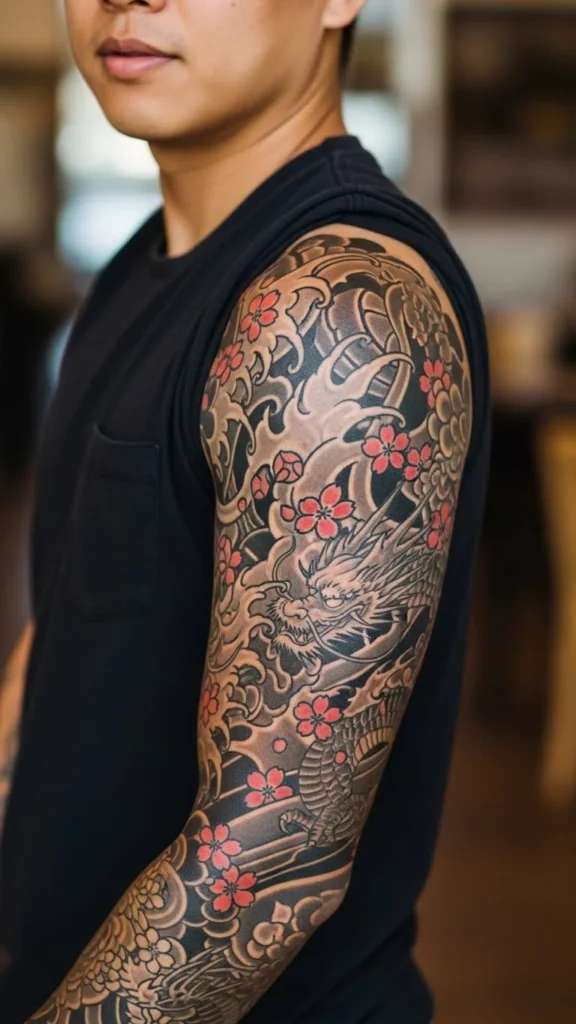
Always approve stencils while standing relaxed—not flexing or forcing posture.
Leave Breathing Room (Flow Needs Space)
Too many tattoos packed together can ruin flow.
Why space matters:
- Gives designs room to stand out
- Prevents visual clutter
- Makes future additions easier
Negative space is not “empty.” It’s intentional design.
Some of the best-looking tattooed bodies aren’t fully covered—they’re thoughtfully balanced.
Work With One Artist (or a Very Coordinated Few)
Tattoo flow is easiest when one artist oversees the big picture.
Benefits of one main artist:
- Consistent style and technique
- Better long-term planning
- Smoother transitions
If you use multiple artists:
- Keep the style consistent
- Share photos of existing tattoos
- Communicate your flow goals clearly
An artist who asks about future plans is a green flag.
Think Long-Term, Not Just the Next Tattoo
Trends fade. Flow lasts.
Before getting a new tattoo, ask:
- Will this connect visually later?
- Does it block future placement?
- Does it match my overall direction?
You don’t need a full-body blueprint—but you should avoid short-term decisions that create long-term problems.
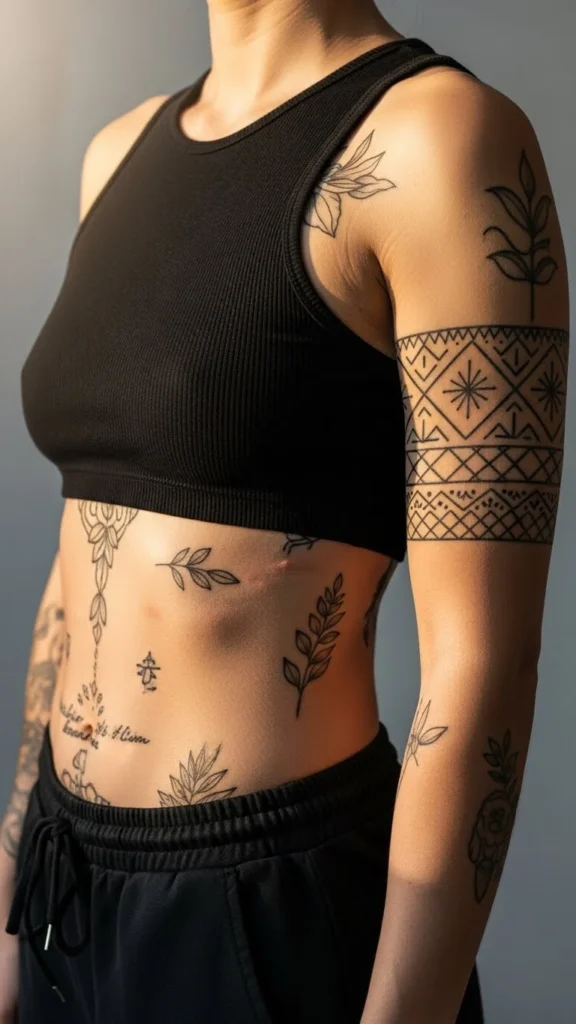
Final Takeaway
Planning tattoo flow across your body isn’t about perfection—it’s about intention. Follow your natural lines, stay consistent with style, start big, and leave room to grow. When tattoos flow well, they feel like part of you, not just decorations on skin