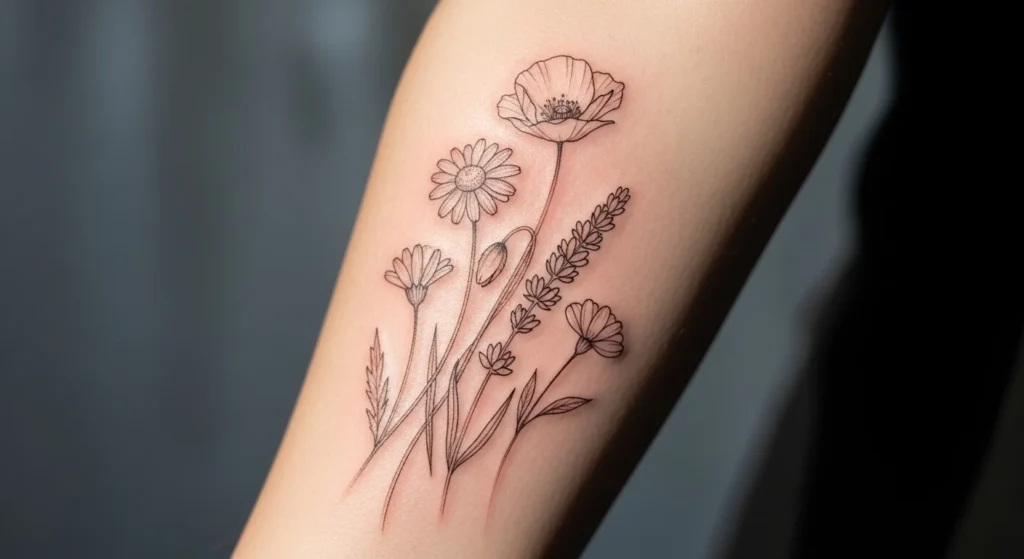
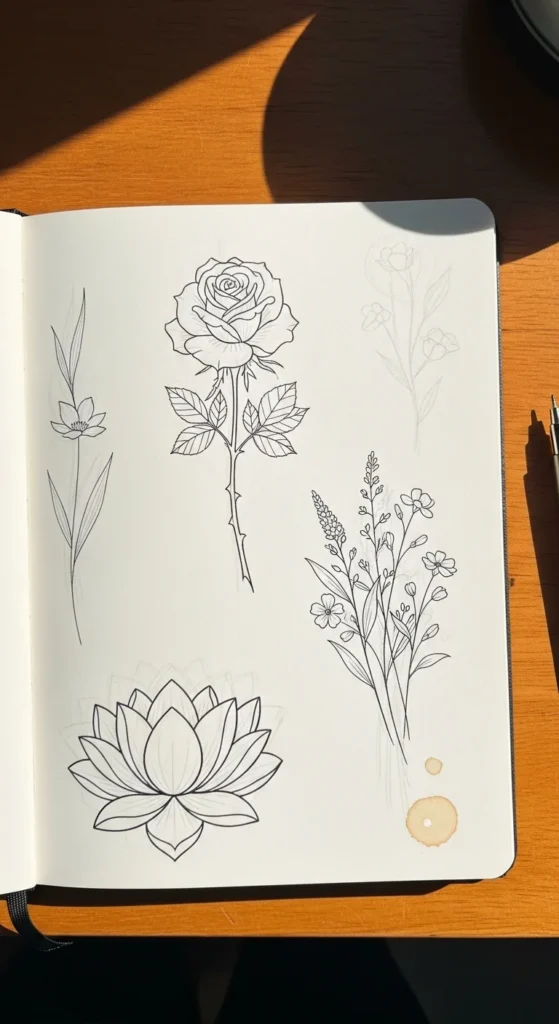
Fine line florals are the “little black dress” of tattoos: timeless, flattering, and easy to make personal. A delicate rose on the forearm, a lotus on the sternum, a wildflower cluster on the shoulder—these designs feel soft and minimal, but they can still carry big meaning.
The tricky part? Picking a floral tattoo that’s not just pretty today, but also ages gracefully and still feels like you years from now. This guide walks you through exactly how to choose the right fine line floral design—step by step.
Step 1: Start With the “Why” (Meaning Before Aesthetics)
Before you choose a flower, choose the story.
Ask yourself:
- Do I want this flower for its symbolism?
- Is it tied to a person, memory, or milestone?
- Do I want something purely aesthetic (and that’s totally okay)?
Popular flower meanings (quick inspiration)
- Rose: love, passion, devotion (classic and elegant)
- Lotus: purity, growth, enlightenment (spiritual and calm)
- Daisy: innocence, simplicity, fresh beginnings
- Sunflower: loyalty, warmth, optimism
- Wildflowers: freedom, resilience, “I grow where I’m planted”
Pinterest-friendly tip: If you’re stuck, pick one word you want the tattoo to represent—like healing, strength, peace, or new chapter—then match a flower to that vibe.
Step 2: Choose a Floral Style That Matches Your Taste
“Fine line floral” can look totally different depending on the style. This is where your design starts to feel custom.
Fine line floral styles to consider
- Single-stem minimal (one flower, clean outline, lots of breathing room)
- Botanical illustration (vintage book vibe, delicate realism)
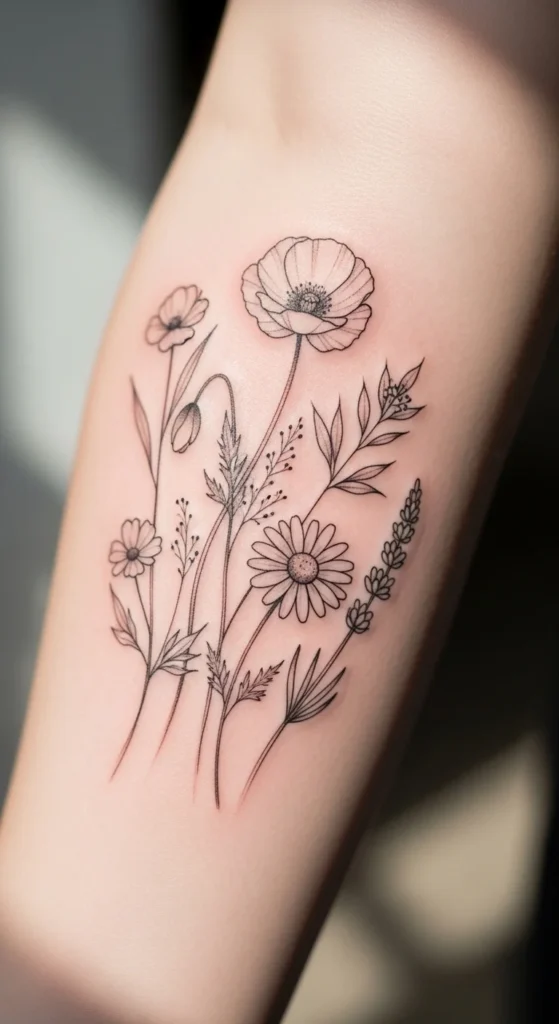
- Wildflower cluster (organic, modern, slightly messy in a good way)
- Monoline/continuous stem (one-line look, very minimal)
- Wreath or circular floral (balanced, bracelet-like layouts)
- Soft shading / micro-realism petals (more depth, still delicate)
Step 3: Match the Design to a Placement That Helps It Age Well
Fine line tattoos are delicate by nature, so placement matters more than people think.
Best placements for crisp fine line florals
- Inner forearm
- Upper arm
- Shoulder blade / back
- Ribcage (vertical designs)
- Inner bicep
These areas usually have less friction and can hold detail better.
Placements that can fade faster (not impossible—just higher maintenance)
- Ankles and feet (shoes/socks rub)
- Hands/fingers (high use + frequent washing)
- Collarbone (sun exposure)
- Areas with lots of bending (wrists, elbows)
Rule of thumb: If the area gets lots of sun or rubbing, consider:
- going slightly larger
- choosing simpler linework
- planning for touch-ups later
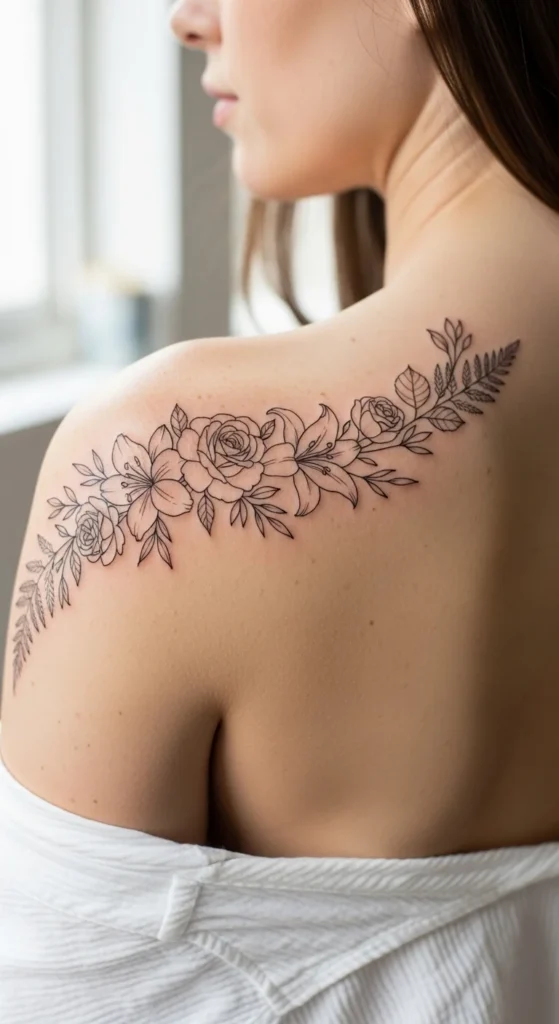
Step 4: Get the Size Right (Bigger Isn’t “Less Minimal”)
One of the biggest mistakes with fine line florals is going too tiny—especially with detailed petals.
How to think about sizing
- Tiny designs look cute but can soften faster
- Medium designs often age best (still minimal, but clearer)
- Large designs allow detail without crowding and can look very elegant
If you want crisp petals and readable detail, a little extra size can actually make the tattoo look cleaner long-term.
A simple sizing test
If you can’t clearly see the flower’s details from arm’s length in the stencil, it may blur together later.
Step 5: Add a Personal Twist (Without Making It Busy)
You can keep the tattoo minimal and meaningful by adding subtle customization.
Easy ways to personalize a floral tattoo
- Use your birth flower (or a loved one’s)
- Combine two flowers into one stem (symbolizing connection)
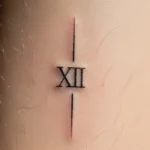
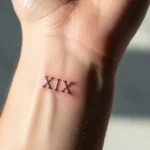
- Add a tiny date in roman numerals (small and clean)
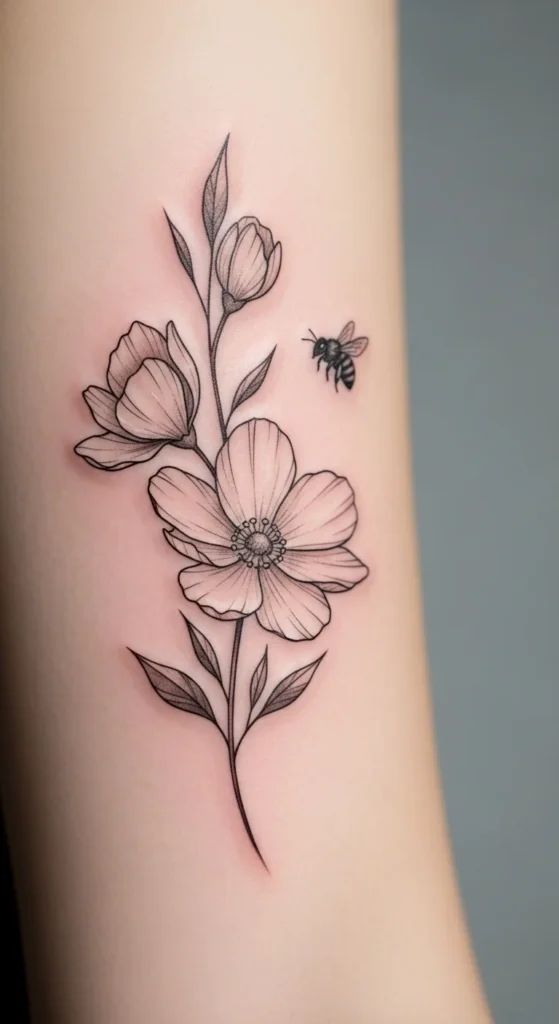
- Add a bee, butterfly, or ladybug (nature vibe, 2026 trend)
- Include a very light dotwork halo or sparkle accents
- Turn the stem into a gentle wrap (collarbone, ankle, wrist)
Keep it simple: One “special detail” usually looks better than five.
Step 6: Vet Your Artist Like a Pro (Healed Photos Matter Most)
Fine line florals live or die by artist technique.
What to look for in an artist’s portfolio
- Healed work (not just fresh tattoos)
- Smooth, consistent line thickness
- Clean curves (no shakiness)
- Minimal blowouts (ink spreading outside the line)
- Florals that still look crisp after healing
Questions to ask before booking
- “Do you have healed fine line florals I can see?”
- “Do you recommend outline-only or soft shading for this design?”
- “What size will hold up best in this placement?”
A great artist will guide you toward a design that looks beautiful now and later.
Step 7: Plan for Longevity (Your Floral Will Thank You)
Fine line tattoos can age softly and beautifully—especially florals—if you treat them right.
Longevity habits that actually work
- Moisturize after healing (healthy skin = cleaner lines)
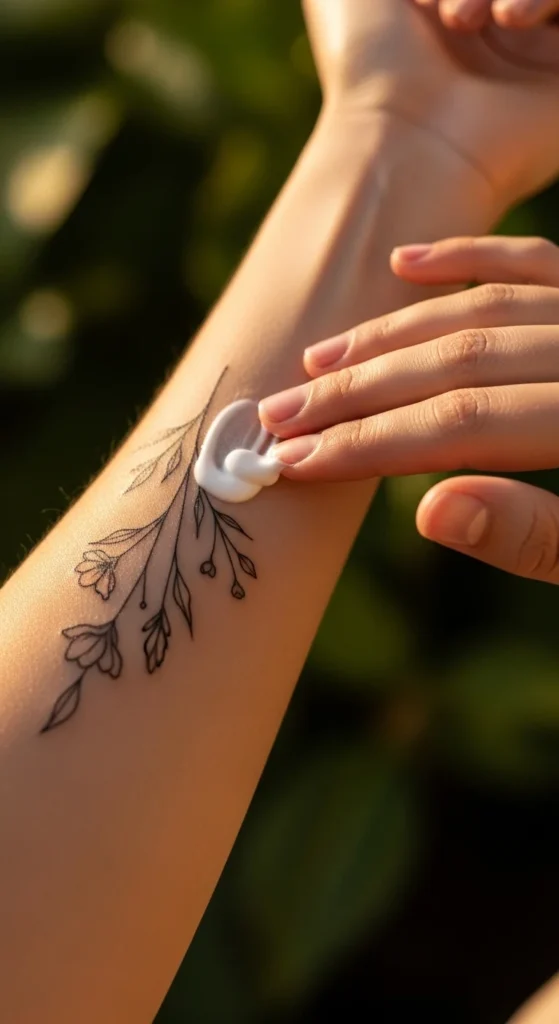
- Use sunscreen on exposed tattoos (SPF is everything)
- Avoid picking during healing (biggest cause of patchy lines)
- Expect touch-ups eventually (normal for fine line)
If you’re choosing a high-exposure placement (like collarbone or ankle), just go in knowing it may need more maintenance.
Final Takeaway
Choosing a fine line floral tattoo design is part meaning, part style, and part strategy. The best designs are the ones that:
- match your story (or your aesthetic)
- fit the placement you actually want
- have enough breathing room to age well
- are done by an artist with healed fine line floral work
✨ Save this guide for later—and when you’re ready, bring your top 3 flower ideas to your consultation so your artist can help you refine the perfect design.