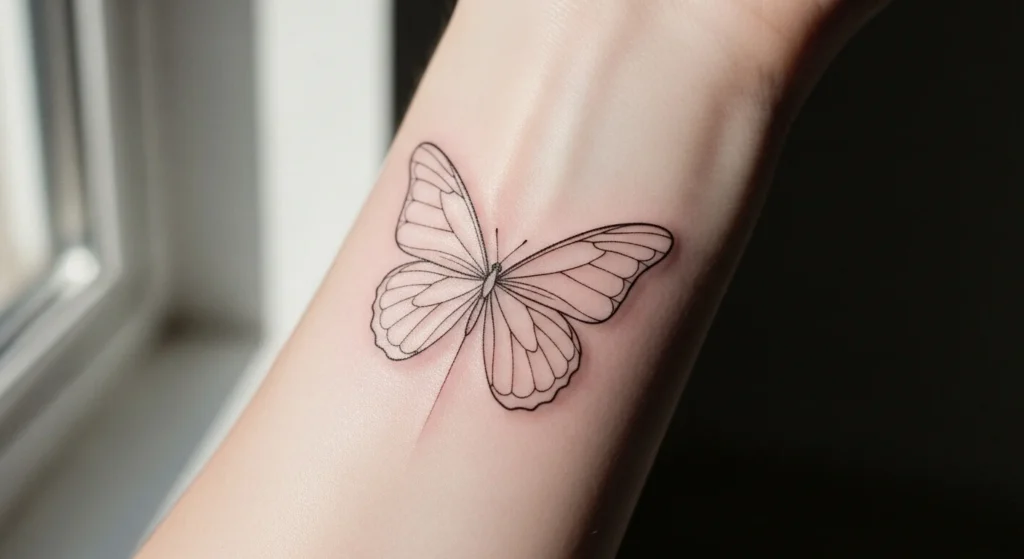
A fine line butterfly tattoo is small enough to feel subtle… but meaningful enough to feel like a personal milestone. It’s the kind of tattoo people choose when they’re stepping into a new version of themselves—fresh start, freedom, healing, glow-up, all of it. And because butterfly wings are naturally delicate, fine line is the perfect style for that airy, “almost floating” look.
The secret is doing it in a way that stays crisp—especially if you want it on high-movement spots like the wrist or ankle. Here’s how to plan it like a pro.
Step 1: Pick the Meaning You Want Your Butterfly to Carry
Butterflies are popular for a reason: their symbolism fits a lot of real-life stories.
Common butterfly meanings
- Transformation (new chapter, healing, growth)
- Freedom (choosing yourself, independence)
- Resilience (surviving something hard)
- Lightness (joy, softness, optimism)
- Memorial (a loved one, a date, a reminder)
Quick exercise: Finish this sentence: “This butterfly is for…”
That one line can guide your style, placement, and whether you add extra elements (like florals or initials).
Step 2: Choose a Style That Matches Your Vibe (Minimal vs. Detailed)
Fine line butterfly tattoos can go ultra-minimal or beautifully detailed—both can look amazing, but they age differently.
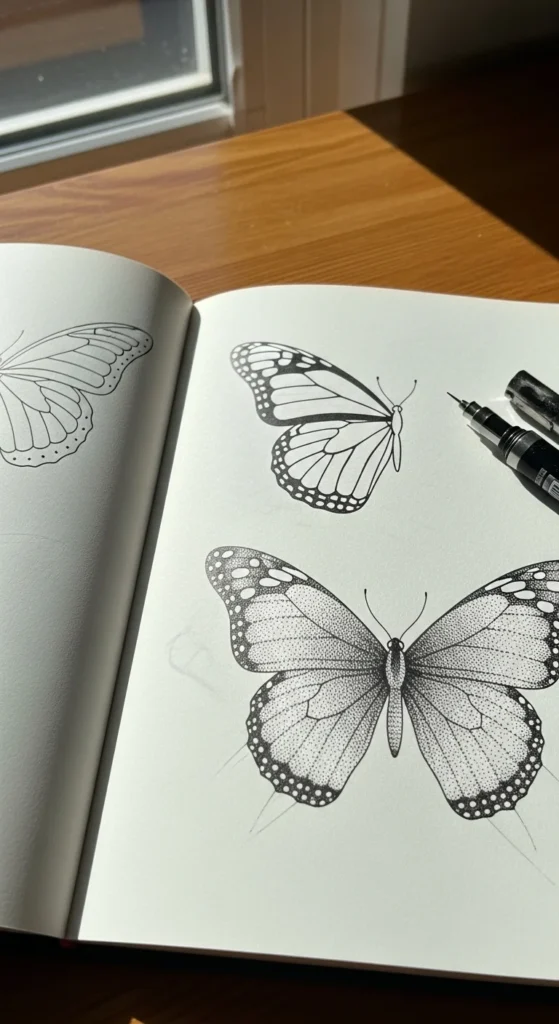
Best fine line butterfly styles (Pinterest favorites)
🦋 Minimal outline butterfly
- Clean, airy, timeless
- Great for wrists, collarbones, behind ear, ankle
- Ages best when not too tiny
🖊️ Single continuous line butterfly
- One-stroke look (super modern)
- Feels effortless and artistic
- Ideal if you want simplicity + longevity
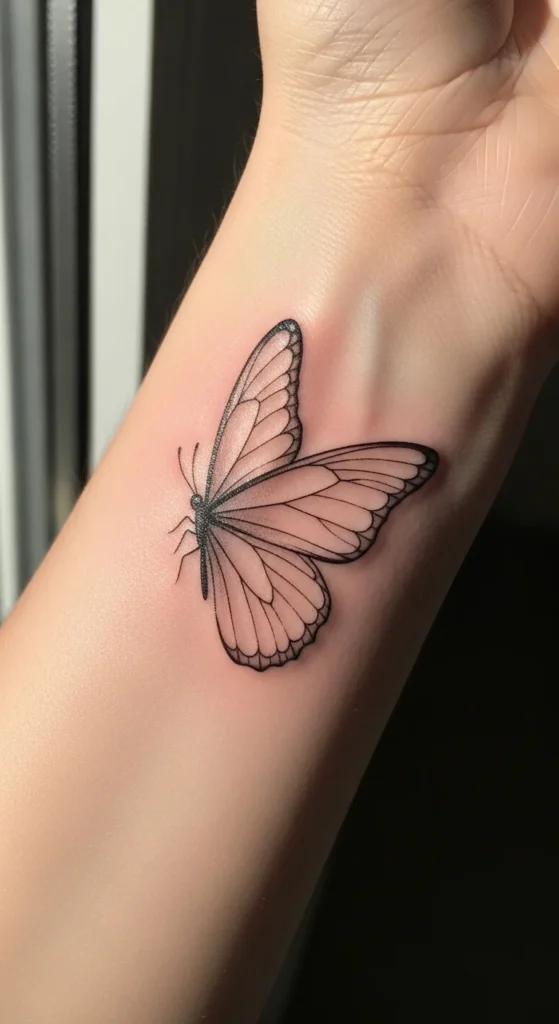
🦋 Monarch-inspired wing pattern
- More authentic, detailed veins
- Looks stunning on forearm, shoulder, upper arm
- Needs a skilled artist to keep the veins clean
✨ Dotwork shading butterfly
- Adds texture without heavy shading
- Makes wings look soft and dimensional
- Great if you want depth but still delicate
🎨 Watercolor wash butterfly (2026 trend)
- Fine line outline + blush color wash
- Very feminine and emotional
- Requires extra sun protection to keep color fresh
Step 3: Add Florals or Geometry (Only If It Enhances the Story)
This is where butterfly tattoos go from “pretty” to personal.
Floral pairings (trending hard in 2026)
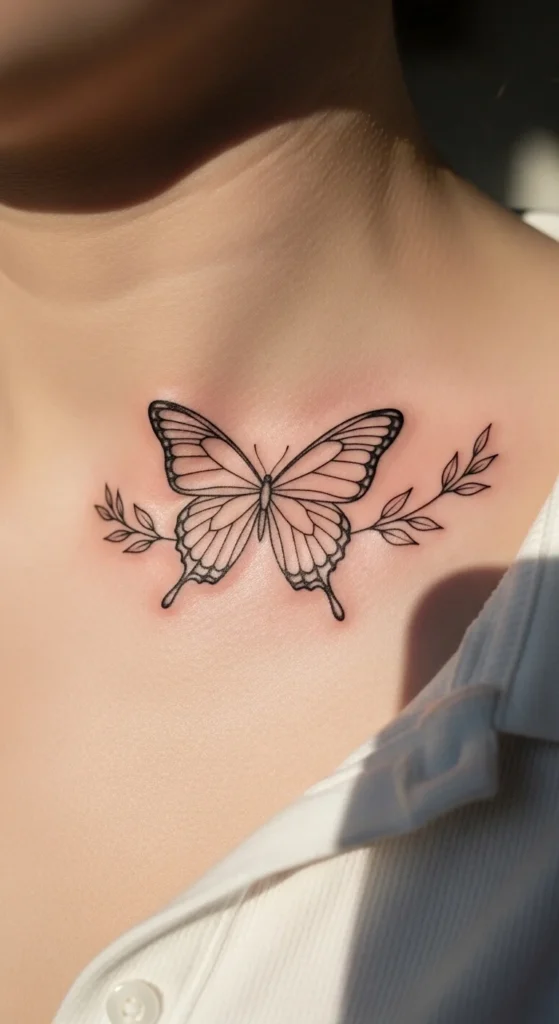
- Tiny vines or leaves wrapping under the wings
- Butterflies sitting on a single flower stem
- Wildflower clusters for a free-spirited look
Geometric pairings (modern, symmetrical look)
- Butterfly centered inside a triangle
- Mandala-inspired symmetry behind the wings
- Thin circles or dotted halos for balance
Keep it light: One supporting element is usually enough. Too many details can blur together over time.
Step 4: Choose Placement Based on Visibility and Longevity
Butterflies look great almost anywhere, but your placement affects how crisp it stays.
Popular placements (and what to expect)
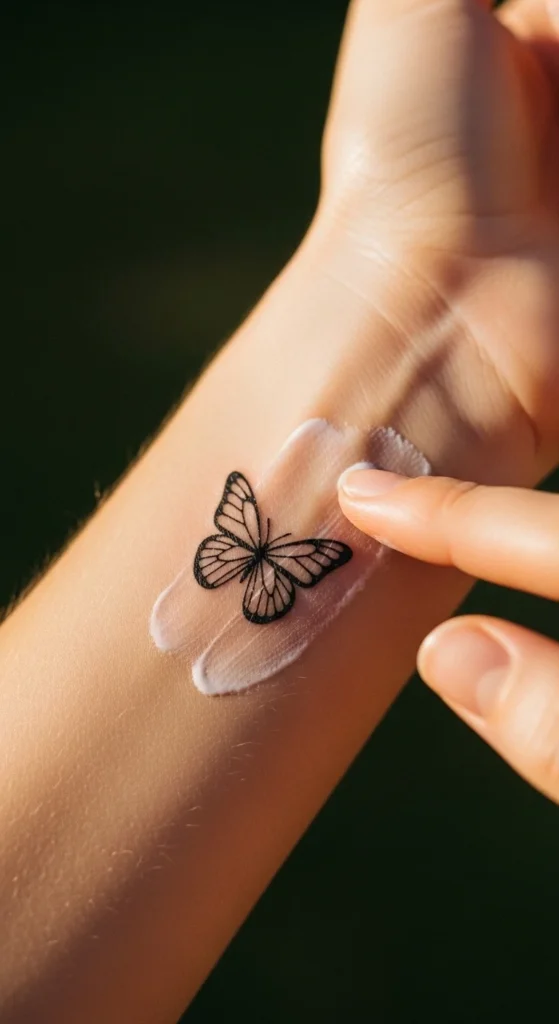
Wrist
- High visibility, daily reminder
- More movement → higher fading risk
- Best with slightly thicker outline or simpler design
Collarbone
- Elegant and “skin jewelry” vibe
- More sun exposure → sunscreen is non-negotiable
- Beautiful for tiny outline butterflies
Ankle
- Cute and delicate
- Shoes/socks rub → highest friction
- Plan for extra aftercare and possible touch-ups
Forearm / upper arm
- Best balance of visibility + longevity
- Great for monarch details or larger wings
Ribs / spine (vertical butterfly or flight trail)
- Looks stunning and lasts well
- Better for designs that flow vertically
Placement tip: If you want lots of tiny wing detail, avoid the highest-friction areas unless you’re okay with touch-ups.
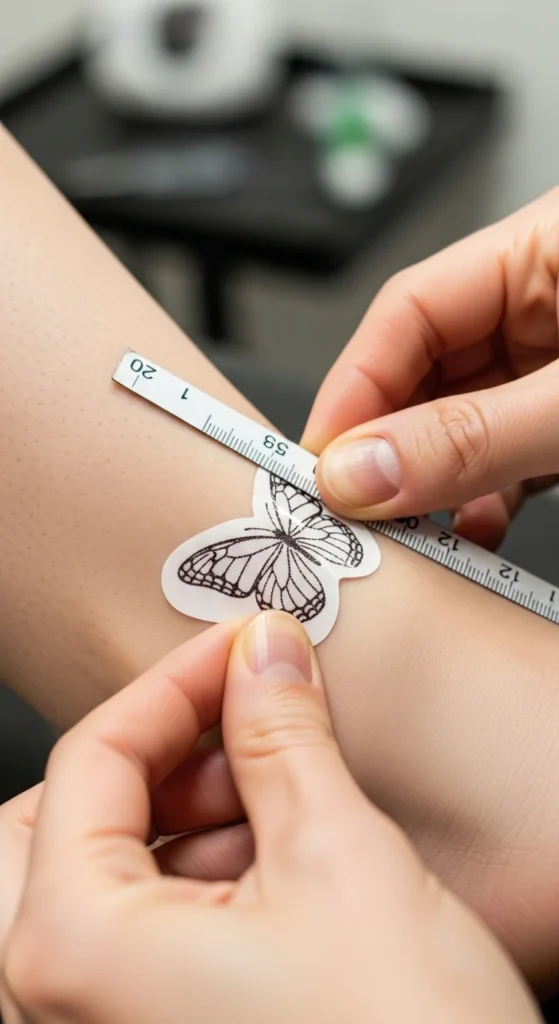
Step 5: Get the Size Right (Tiny Wings Can Blur)
Butterfly wings have fine veins and thin edges—too small and the details won’t hold.
Simple sizing guide
- Under 2 inches: best for outline-only or monoline
- 2–3 inches: sweet spot for small wing details
- 3–5 inches: best for monarch patterns, dotwork texture, or florals
If you’re getting it on the wrist or ankle, sizing up slightly can make a huge difference long-term.
Step 6: Choose an Artist Who Can Do Clean Wings (Healed Photos Matter)
Butterflies expose shaky lines fast. Wing symmetry and clean vein lines take real skill.
What to look for in an artist portfolio
- Healed fine line work (not just fresh)
- Smooth curves and even line weight
- Wings that look crisp a few months later
- Dotwork that looks airy, not muddy
Ask these before booking
- “Do you have healed fine line butterflies I can see?”
- “Would this placement need thicker outlines to last?”
- “Do you recommend dotwork shading or outline-only for longevity?”
A good artist will help you simplify details without losing the magic.
Step 7: Aftercare That Protects Fine Lines (Especially on Wrist/Ankle)
Fine line fades faster when healing is rough—so treat it gently.
First 2 weeks essentials
- Wash gently, pat dry
- Use a thin layer of fragrance-free moisturizer
- Avoid tight sleeves/socks rubbing the tattoo
- No picking during peeling
- Skip heavy sweat sessions early (especially for ankle/wrist)
Long-term protection
- Sunscreen whenever exposed
- Moisturize to keep skin smooth
- Expect touch-ups sooner on high-movement areas
Final Takeaway
A fine line butterfly tattoo can be a beautiful symbol of transformation—if you plan it with longevity in mind.
Your best path to a crisp, elegant butterfly:
- Choose a style that fits your story
- Keep details clean and not too tiny
- Pick placement based on friction and sun exposure
- Vet your artist using healed work
- Protect it like jewelry with moisturizer + SPF
🦋 Save this guide for later—and when you’re ready, shortlist 2–3 butterfly styles (outline, monarch, dotwork) to bring to your consultation!